ResourcesFilm
The respondent’s side
The debrief dictionary from the other side of the questionnaire, in four entries, about the person being asked.
On screen
62 seconds, with sound
First published .
A person works down a rating grid of sixty rows: reading every word, then some of the words, then a straight line down the middle with their eyes shut. Asked for the main reason they prefer their provider, they pass over every option, tick the last one and write the real reason into a box too small to hold it; the answer in the file is “Other”. Asked whether a brand has good customer service, they look from one option to the other until a third is put in front of them, and join the fifty-eight who ticked it. The last entry is the people themselves. It plays with the sound off.
- grid n. Sixty questions, asked as one.
- other (please specify) n. Where the truth went.
- don’t know n. The most honest answer in the file.
- respondent n. A person, doing you a favour.
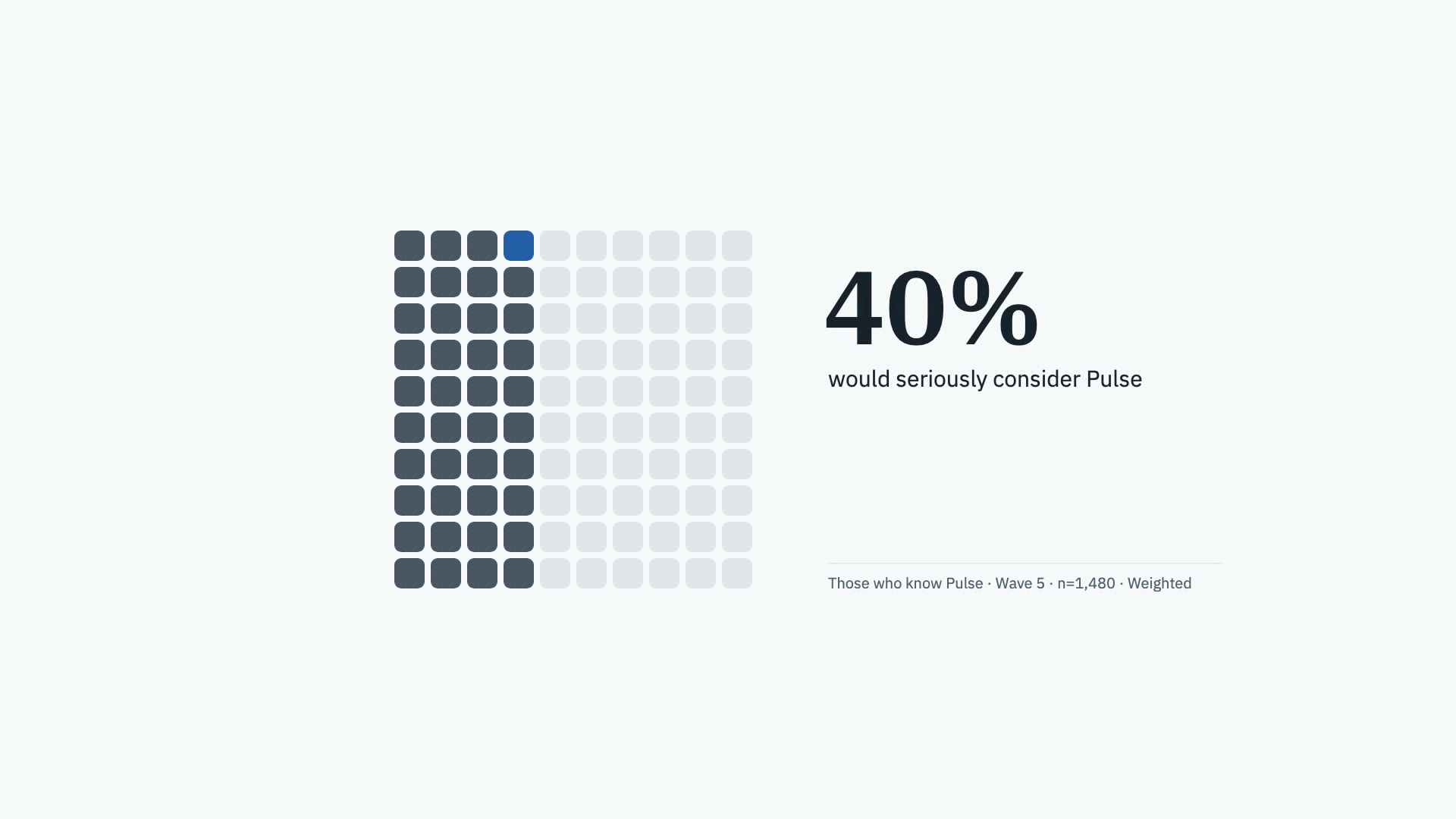
Don’t know is real data: the answers to “Harbour has good customer service” in the fifth wave of the example study in Velocity, among those who know Harbour, with weighted percentages and counted people. The study’s data is synthetic and its brands are fictional. The grid, and the answer written in other, are invented. The film is the companion to The debrief dictionary.
Next
More films
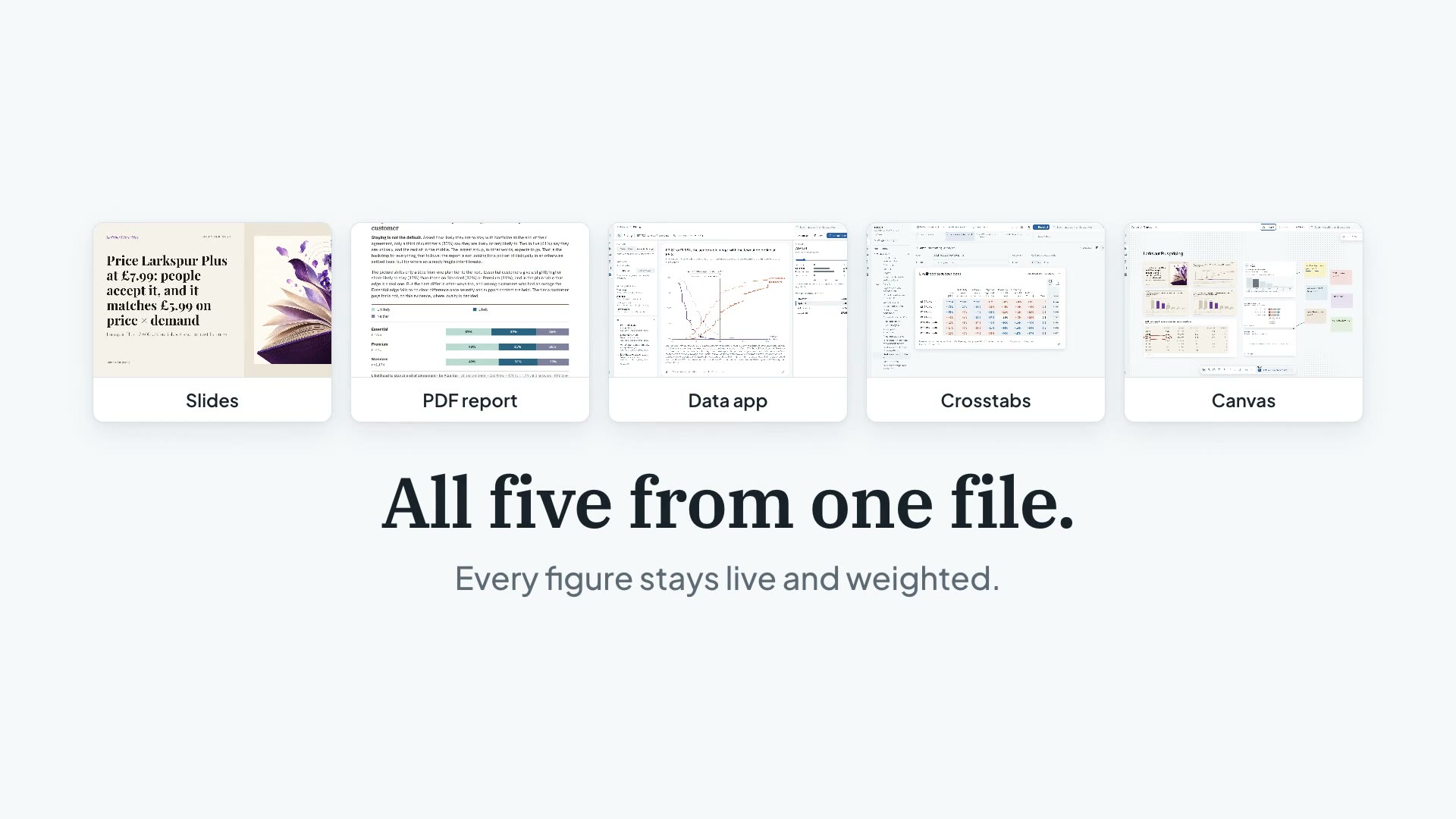 45 secondsOverviewA place to think with dataOne survey file becomes five linked surfaces in Velocity: slides, a PDF report, a pricing data app, crosstabs and a Canvas whiteboard.
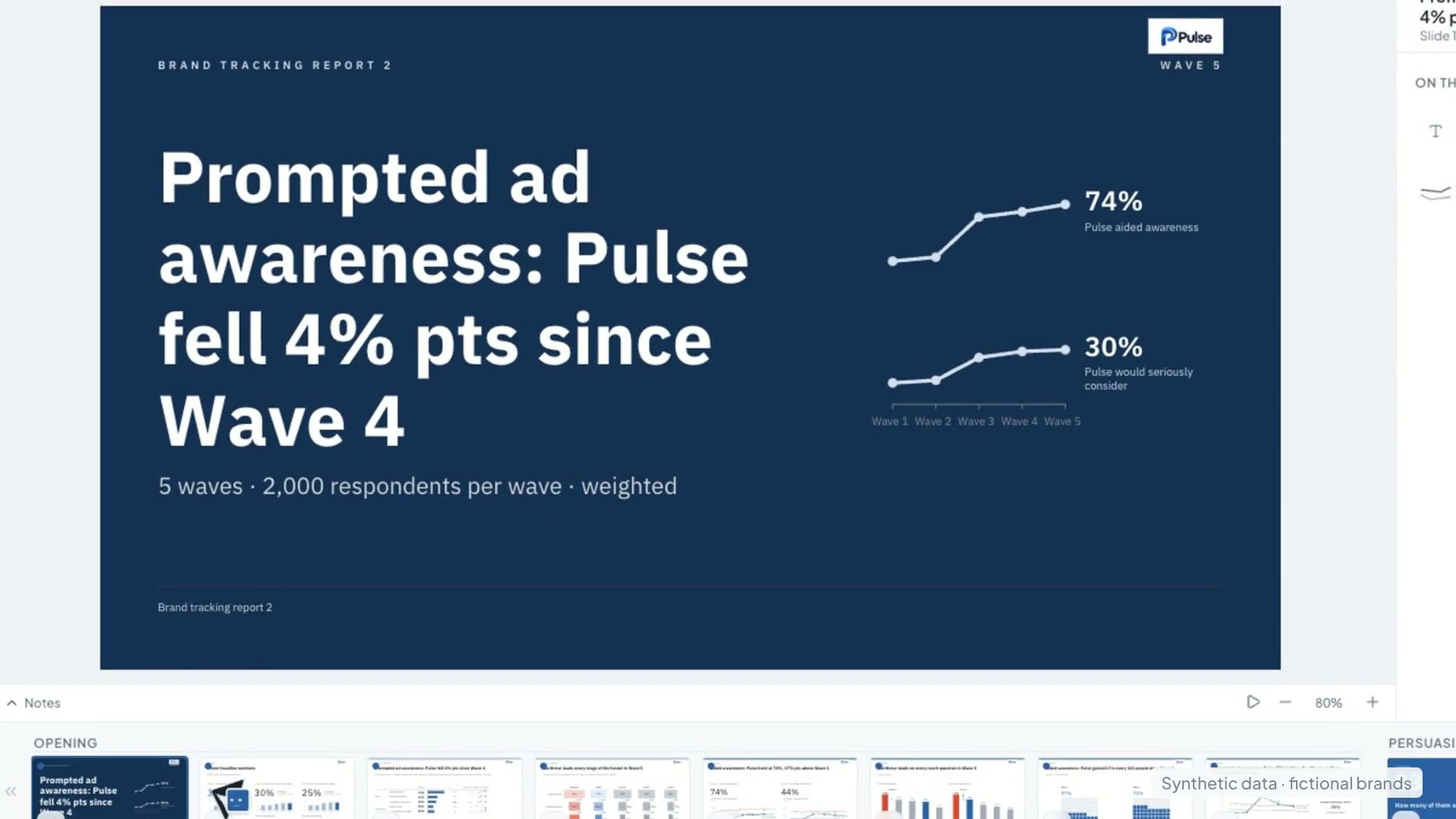 34 secondsBuildThe deck by FridayThe tables are done; the deck is not. Pick a tracker template, apply the client’s brand, draft the report from live data, and edit every headline in place.
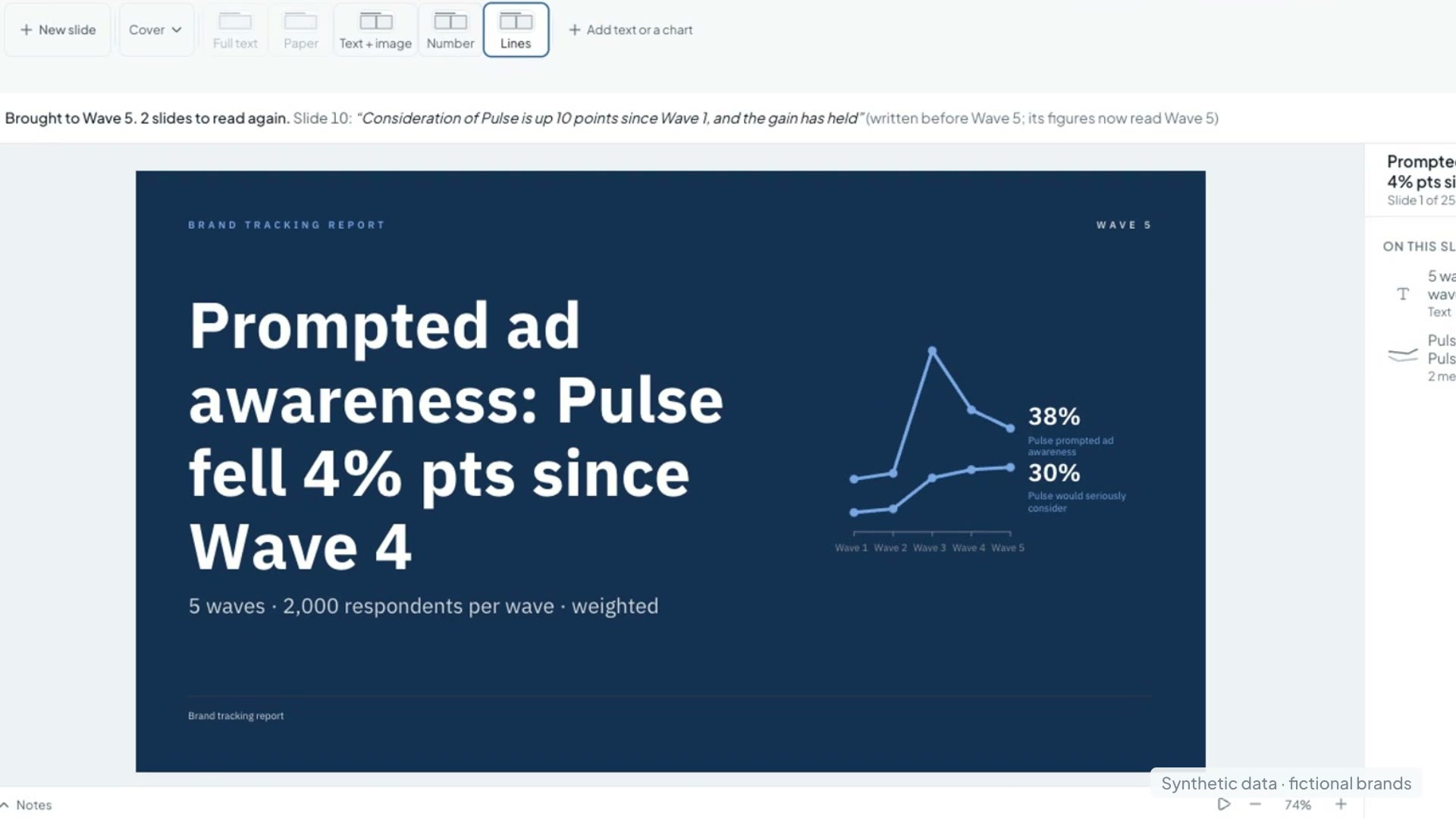 45 secondsBuildWave 5 is inWhen the new wave arrives, update the tracker file in place, preview every change before committing, and review only the headlines written before Wave 5.
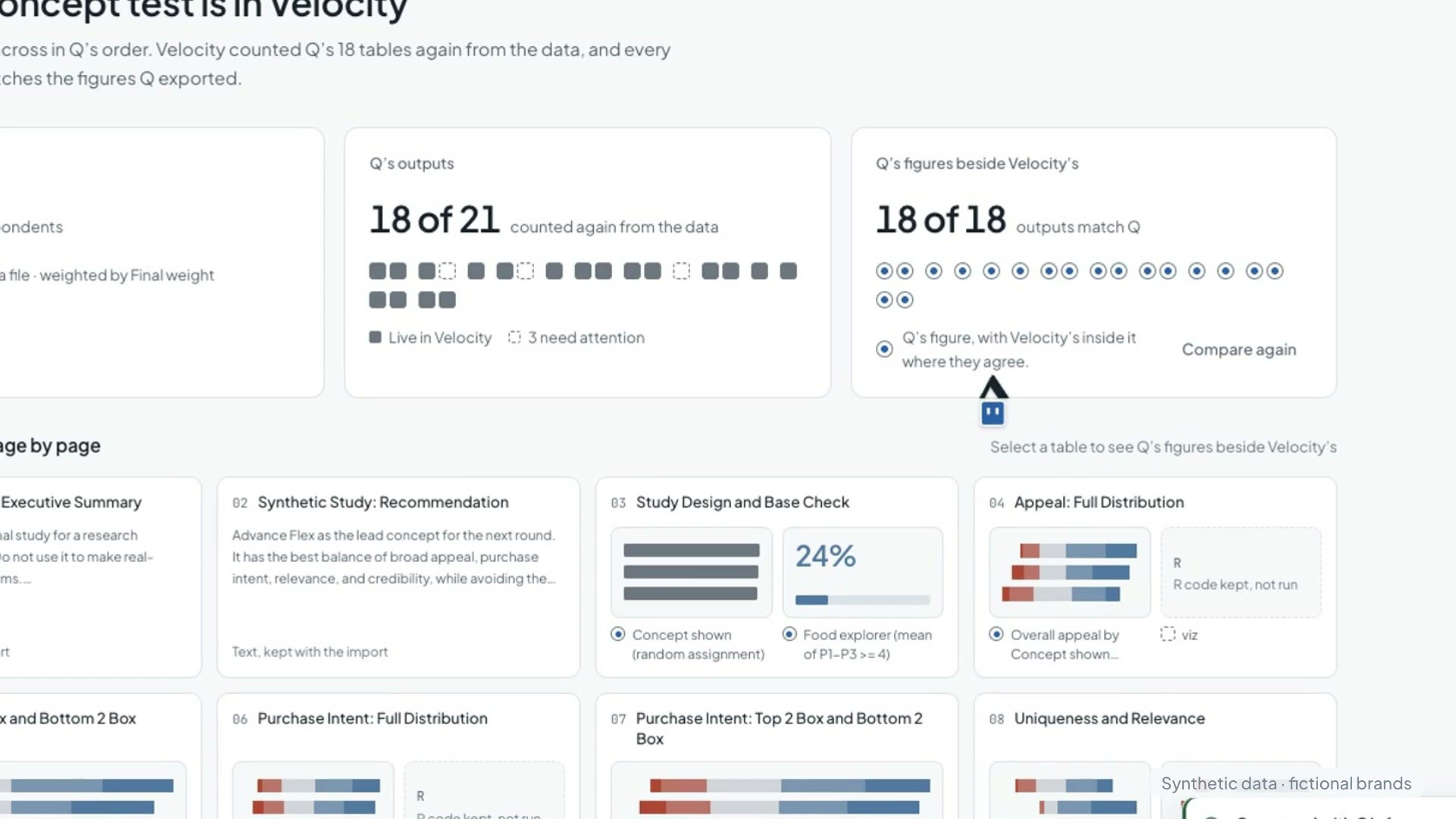 49 secondsThinkWill my numbers match?Open an existing QPack in Velocity, check every table side by side against the figures Q exported, and inspect the live crosstab without touching your original project.
 92 secondsThe afternoonThe debrief dictionaryWhat the words mean when a researcher says them, in eight entries, on one Friday afternoon from 16:54 to 17:00.
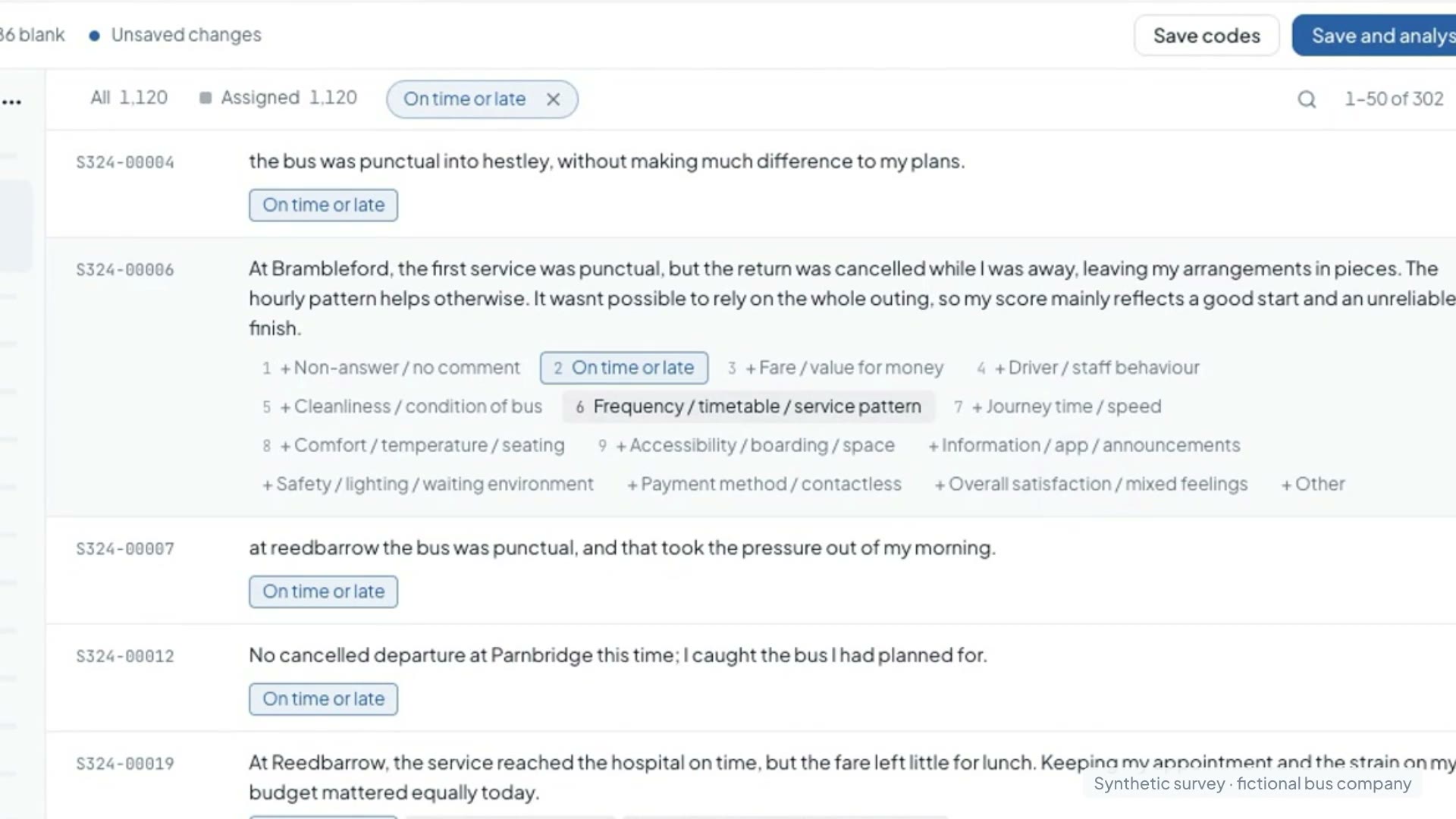 45 secondsAskEvery answer read1,120 open-ended answers coded with AI into a draft codebook, corrected by the researcher, and compared by age.
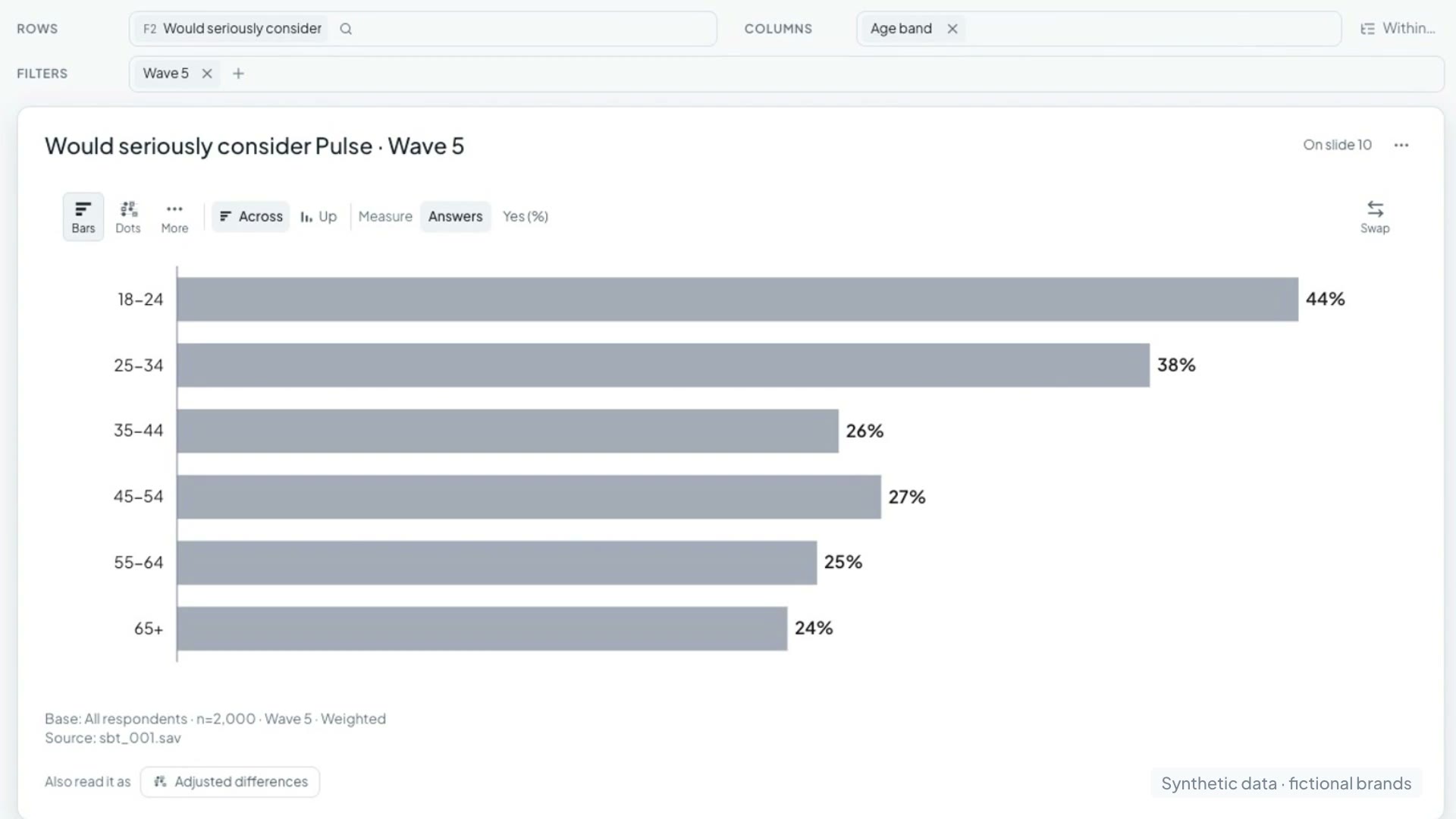 32 secondsThe afternoonCan we just see it by age?Friday, 16:55: the client asks for one quick split by age. In Velocity, it is one change: weighted, significance-tested, and ready to answer at 16:56.
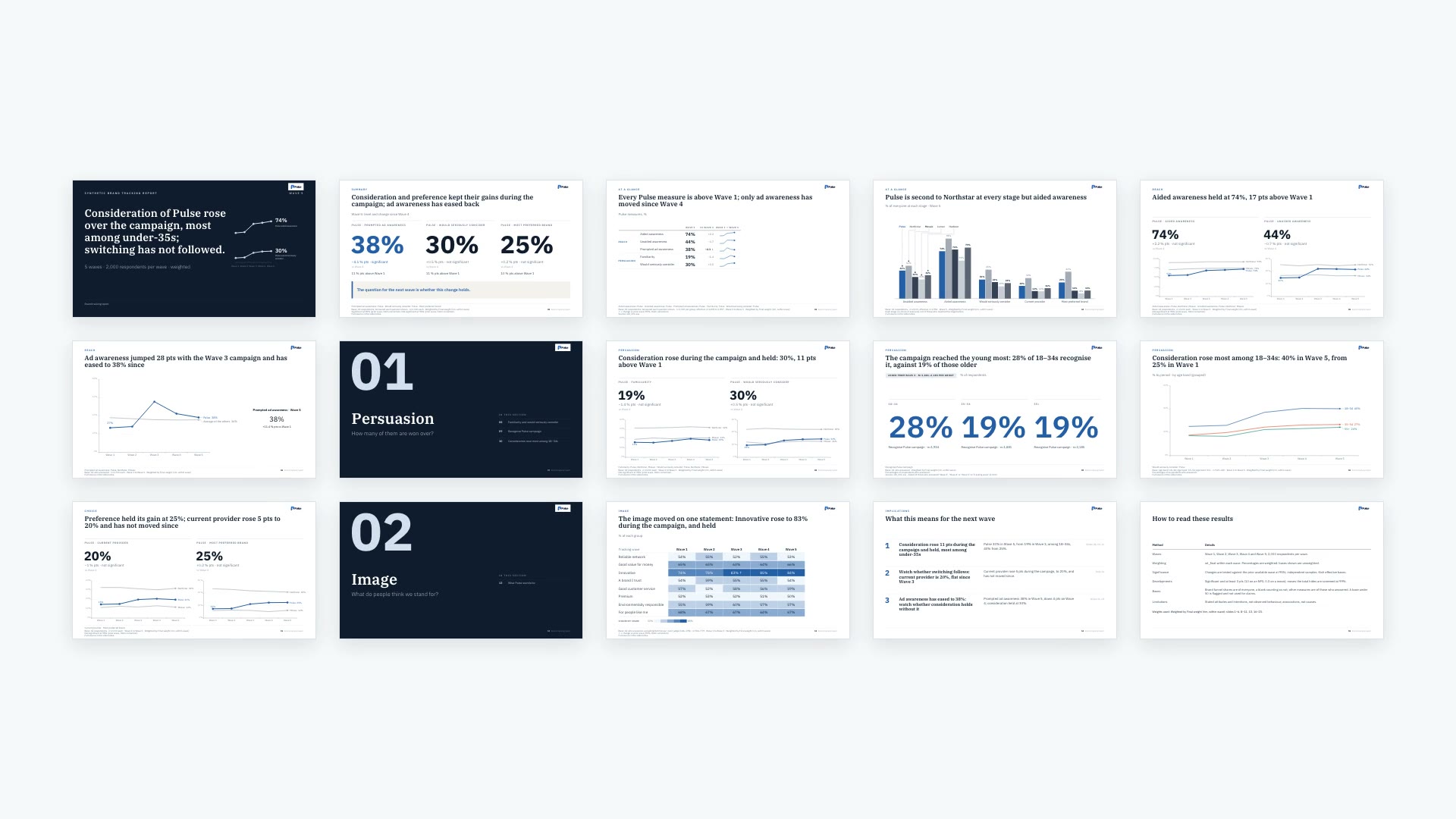 90 secondsBuildFile to finished reportA brand tracker’s file read, drafted into a report, cut, reworded and added to, in the app.
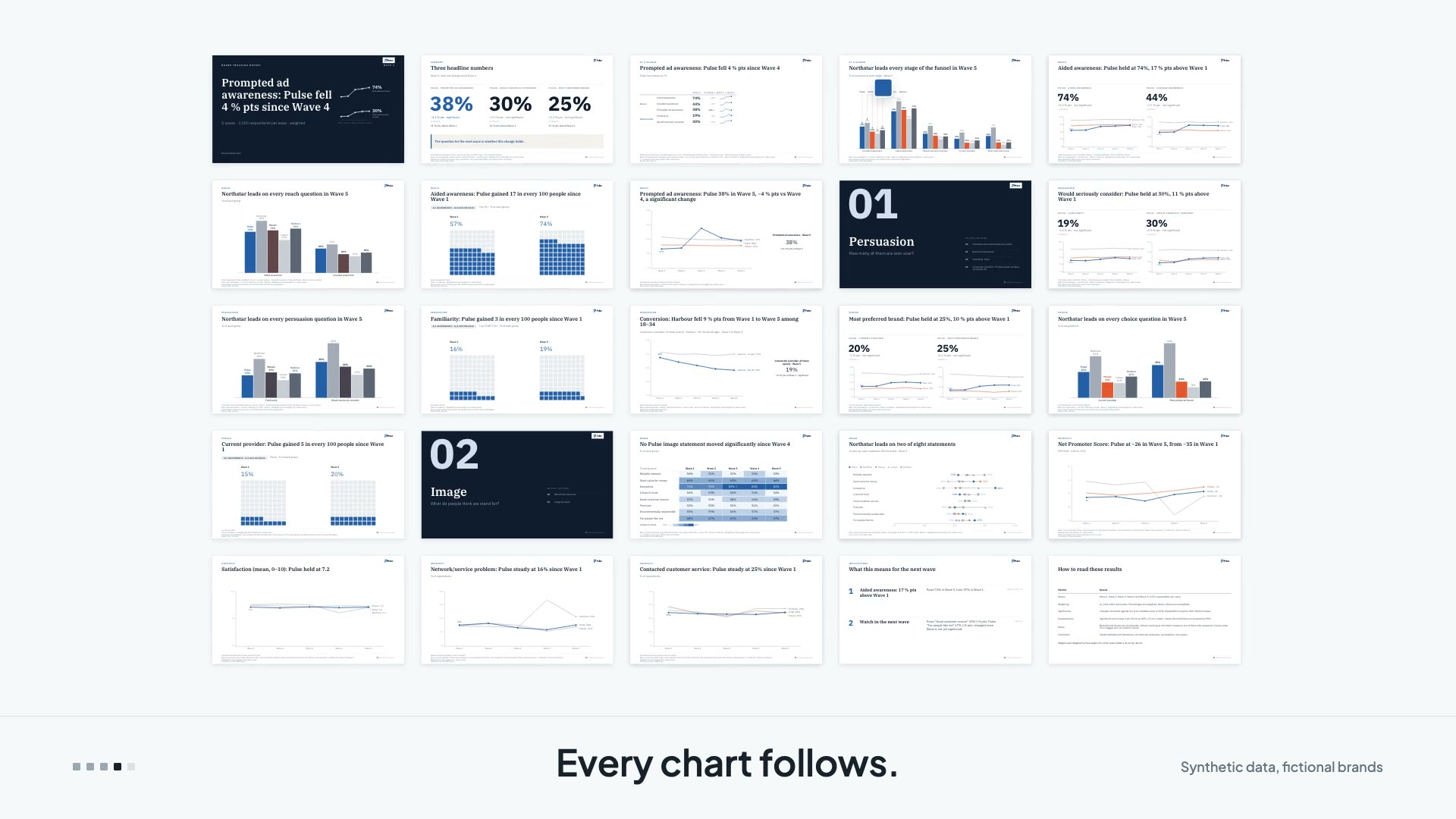 26 secondsBuildClient coloursName your brand and pick a rival once. Every chart in the report follows.
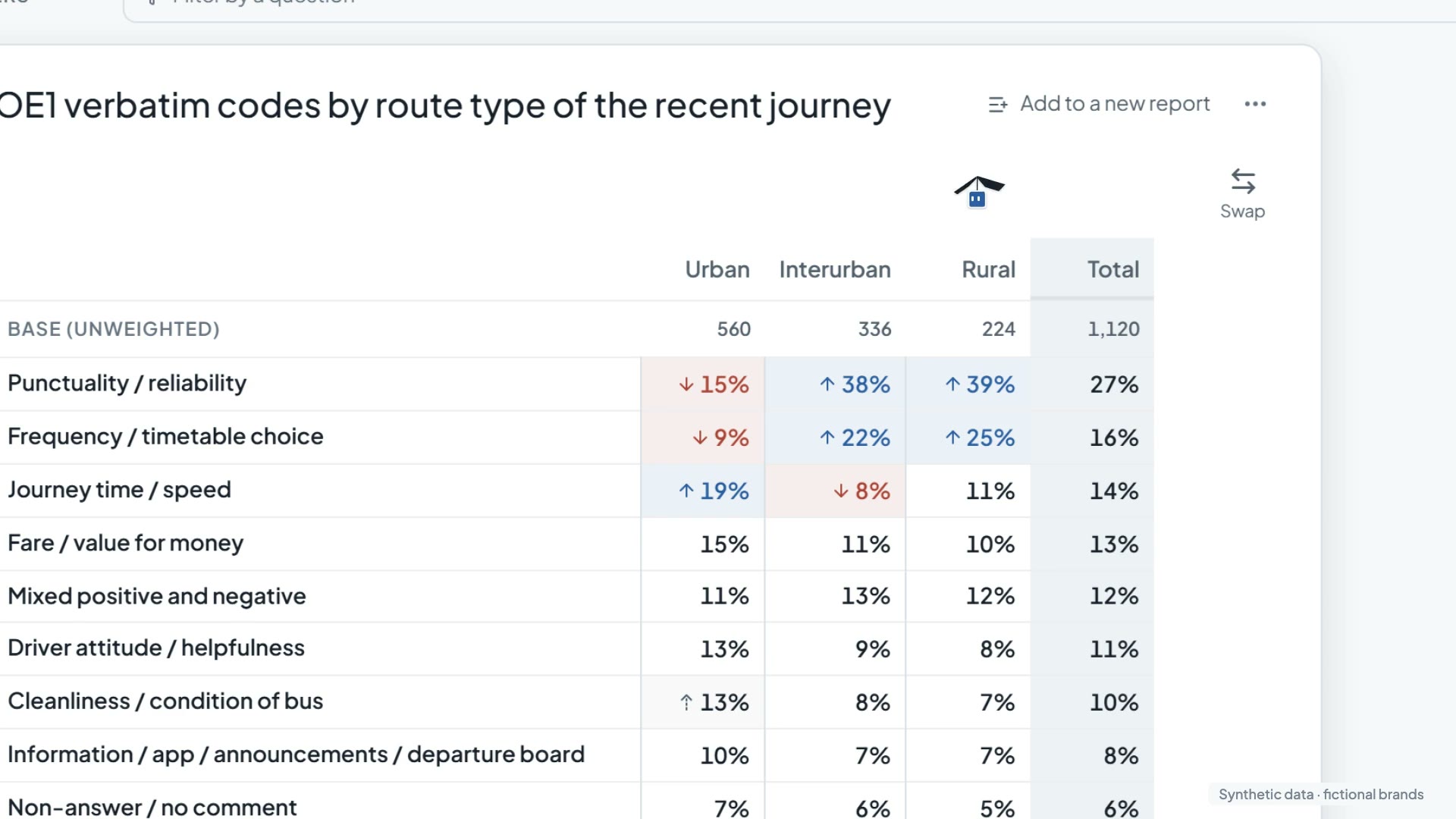 80 secondsThe foundationCoding open-ended survey answers with AIWhat a code frame is, and how Velocity drafts one from the answers themselves, places every answer, and leaves the frame for you to correct before you rely on it.
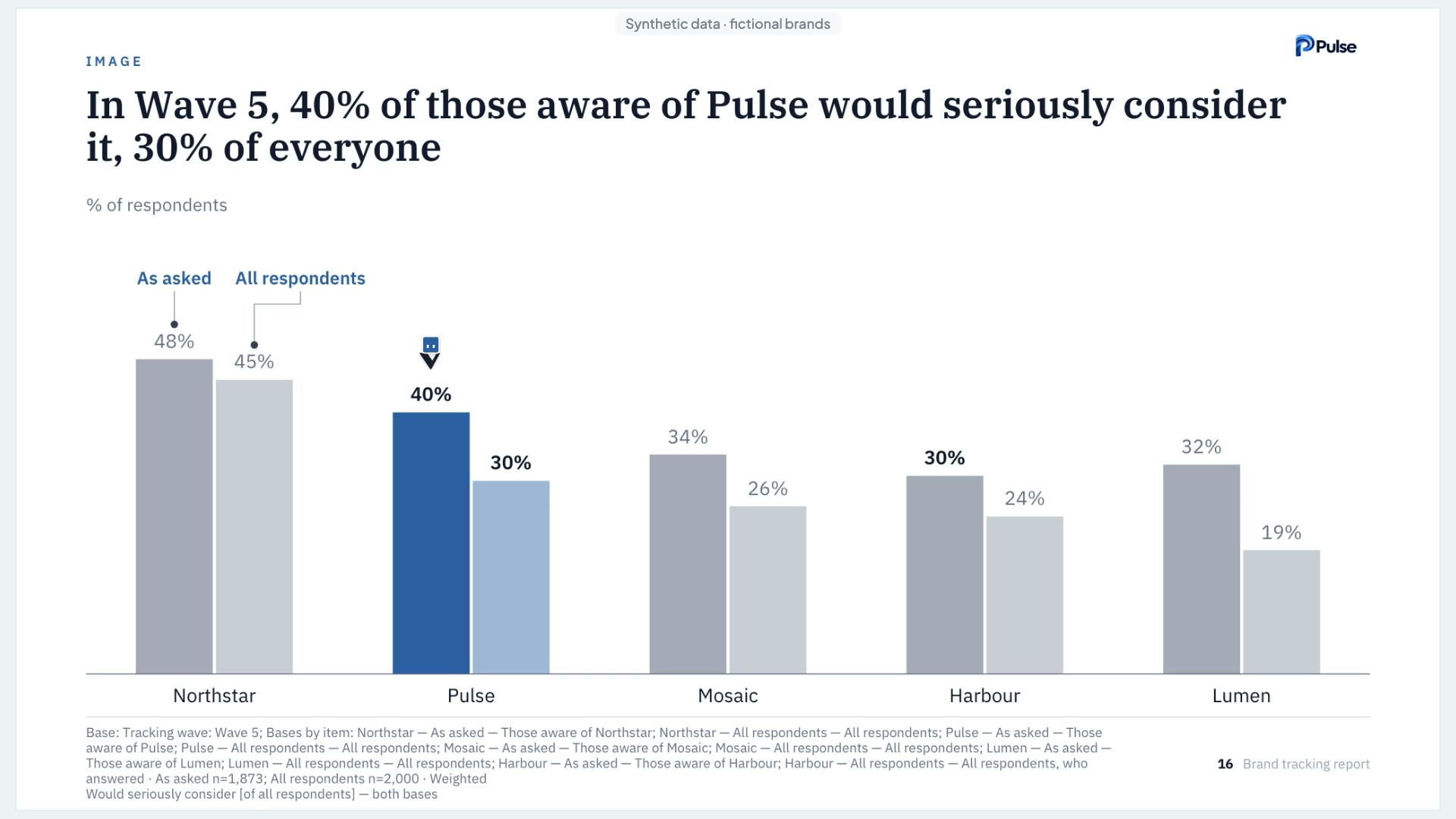 83 secondsThe foundationSurvey bases and routing explainedWhy a percentage means nothing until you know who it is of, and how Velocity keeps each routed question's base as it was asked, shows who is left at each step and lets you keep a wider base beside it.
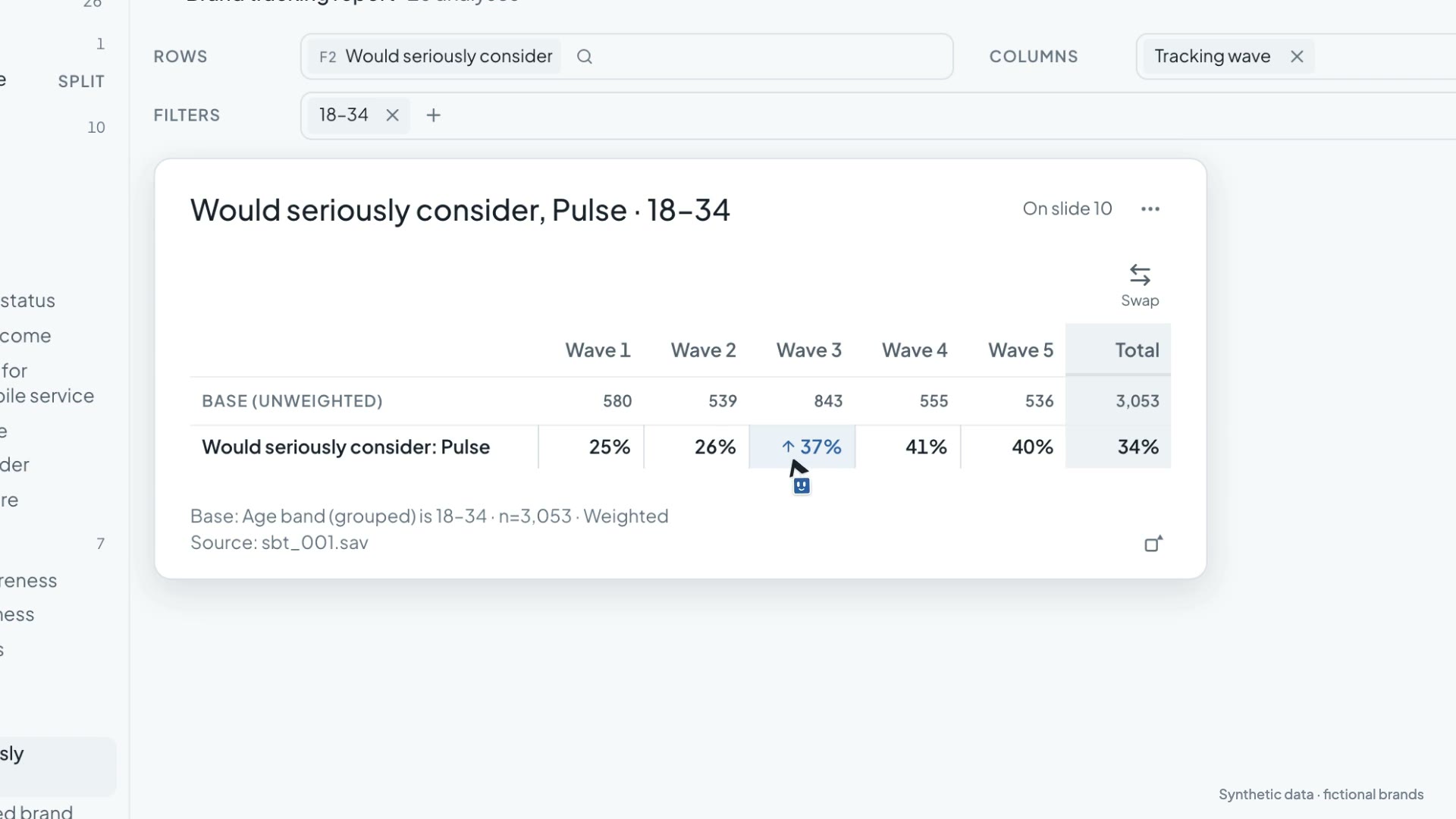 96 secondsThe foundationSignificance testing in survey crosstabsWhat a statistically significant change between two waves is, and how Velocity tests every wave of a tracker against the one before, marks the changes that are significant, and leaves what they mean for you to judge.
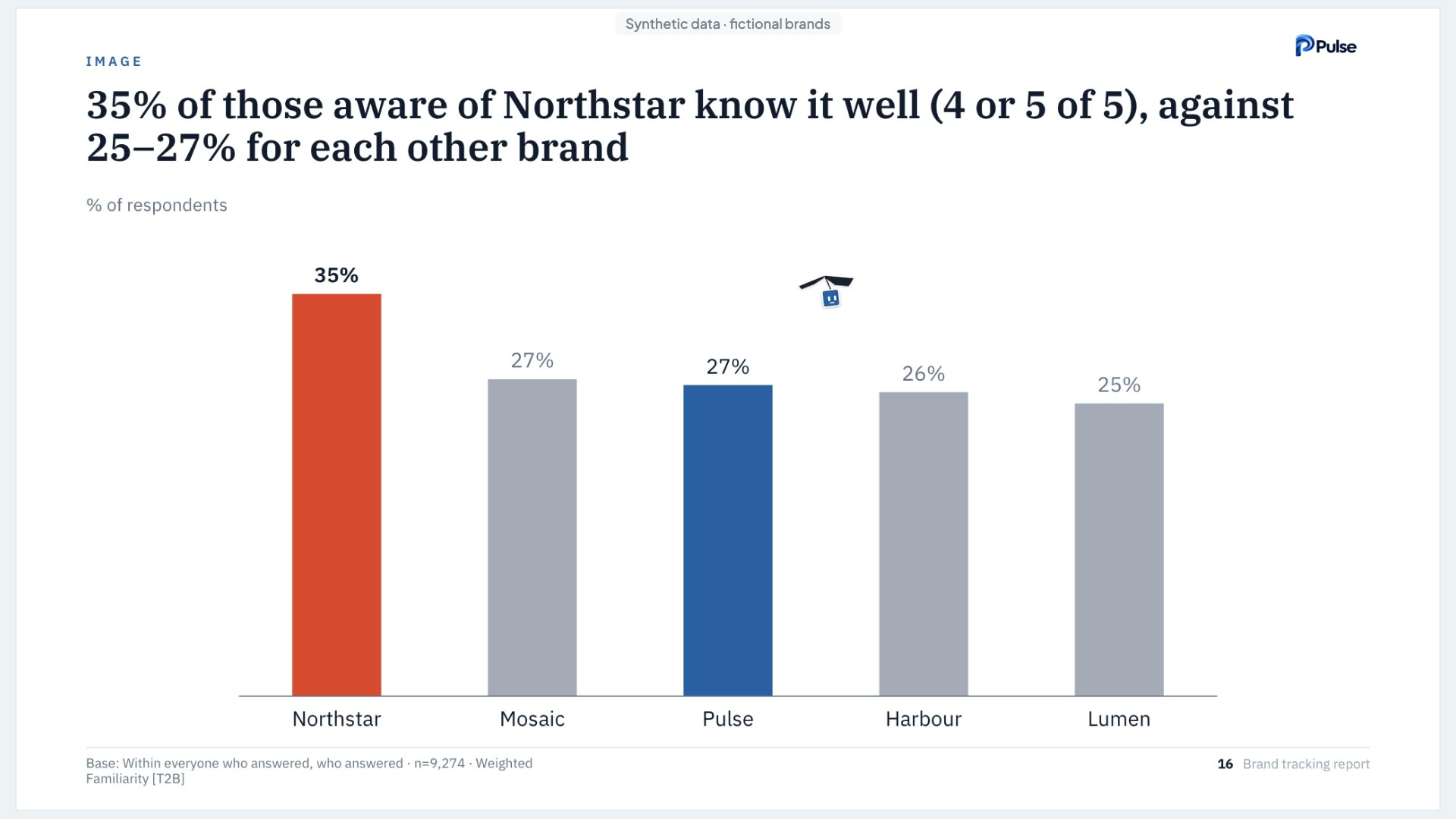 99 secondsThe foundationTop 2 box scores in survey analysisWhy combining the points of a scale is a choice about what the answer means, and how Velocity makes a Top 2 box as a copy of the question, showing its figure and who is in it before you keep it.